
 Alibaba Store
 Tmall Store
 Jingdong Sstore

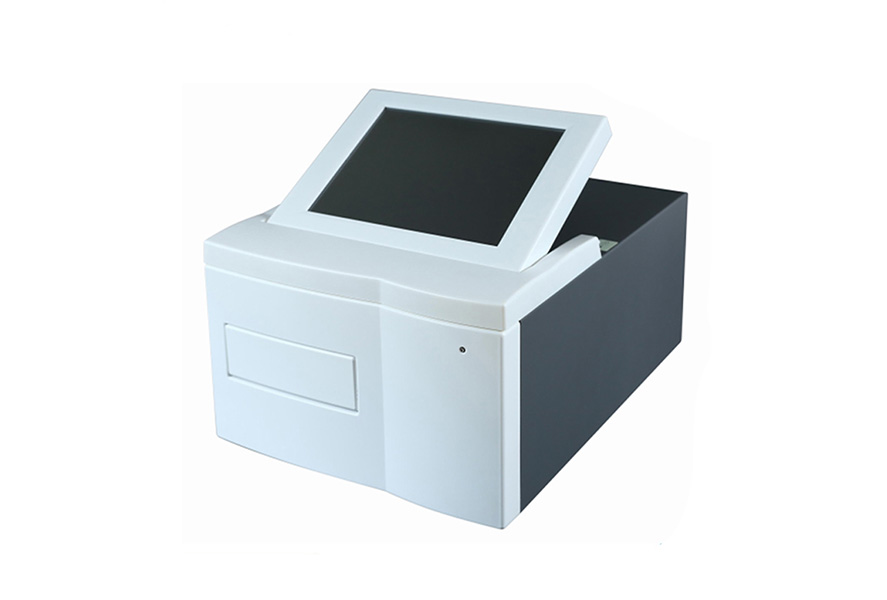
The full wavelength scanning of the Shanghai Yetuo full wavelength enzyme-linked immunosorbent assay analyzer is one of its core functions. It refers to the instrument's ability to gradually scan all wavelengths within a set wavelength range and measure the light absorption or transmission characteristics of the sample at these wavelengths. Unlike traditional single wavelength enzyme-linked immunosorbent assay (ELISA) analyzers, full wavelength ELISA analyzers can provide wavelength scanning data over a wide range, ensuring the comprehensiveness and accuracy of analysis results.
The working principle of full wavelength scanning
Light source and optical system:
The light source of a full wavelength enzyme-linked immunosorbent assay analyzer is usually a xenon lamp, halogen lamp, or laser, which can provide a wide wavelength range of light.
There is usually a spectroscopic system inside the instrument, such as a monochromator, filter, or grating, which can select different monochromatic light (single wavelength light) for illumination throughout the entire wavelength range.
Wavelength selection and scanning:
The instrument controls the wavelength output of the light source through a spectrophotometer. Unlike traditional single wavelength instruments, the Shanghai Yetuo full wavelength enzyme-linked immunosorbent assay analyzer can gradually scan each wavelength based on the set starting and ending wavelengths.
During the scanning process, the instrument will measure the absorbance (A) or transmittance (T) of the sample at each selected wavelength, that is, the absorption or transmittance of light by the sample at each wavelength.
Sample response:
The molecules or ions in the sample will absorb light of different wavelengths based on their chemical structure and optical properties. Different wavelengths correspond to different absorption peaks, displaying the absorbance spectra of substances at various wavelengths.
By measuring these absorbance values, the instrument can help identify the components in the sample or reflect the concentration, chemical reactions, and other characteristics of the sample.
Data recording and display:
After the scanning process is completed, the instrument will record the absorbance (or transmittance) data at all scanning wavelengths and generate a data curve graph (the relationship between absorbance and wavelength, usually referred to as absorbance spectrum).
Users can analyze the characteristics of the sample through these spectra, such as the wavelength position, shape, and height of the absorption peak, and then infer the properties or concentration of the sample.
The advantages of full wavelength scanning
More comprehensive analysis:
Full wavelength scanning can provide complete spectral data for the same sample, rather than just a single data at a fixed wavelength. This means that users can have a more comprehensive understanding of the absorbance characteristics of the sample, especially for multi-component samples, and can distinguish the absorbance peaks of each component.
More precise results:
Due to the ability to scan multiple wavelengths, users can improve measurement accuracy by selecting the optimal wavelength. For example, if a certain absorption peak appears multiple times, a strong absorption peak can be selected for measurement to improve accuracy.
Adapt to more sample types:
Different samples (such as proteins, nucleic acids, enzymes, chemicals, etc.) have different absorption characteristics at different wavelengths. Full wavelength scanning can cover a wider range of wavelengths, making the instrument more adaptable and capable of analyzing different types of samples.
No need to frequently change the wavelength:
In traditional single wavelength instruments, users need to manually adjust the wavelength to obtain data at different wavelengths, while some full wavelength enzyme-linked immunosorbent assay analyzers can automatically adjust the wavelength during the scanning process without manual intervention, improving experimental efficiency.
High throughput analysis:
Full wavelength scanning can measure data at multiple wavelengths at once, eliminating the hassle of measuring each wavelength individually and greatly improving the efficiency of laboratory analysis.
Application of Full Wavelength Scanning
Full wavelength scanning is not only suitable for ELISA (enzyme-linked immunosorbent assay), cell activity detection, protein or DNA/RNA analysis, but also widely used in the following fields:
Drug development and screening:
In drug development, the absorption characteristics of drug molecules towards specific wavelengths of light can reflect their structure and function. Full wavelength scanning can help screen for suitable drug molecules.
Biomarker detection:
In medical testing, biomarkers of specific conditions may exhibit significant absorption or reflection characteristics at certain wavelengths. Full wavelength scanning can help detect these biomarkers and assist in pathological diagnosis.
Food and Environmental Analysis:
Additives and pollutants in food, as well as harmful substances in environmental water bodies, all have absorption peaks at specific wavelengths. Using full wavelength scanning can simultaneously detect multiple pollutants.
Clinical diagnosis:
Used for qualitative and quantitative analysis of samples (such as blood, urine, secretions, etc.) in clinical trials. Wavelength scanning can help detect the concentration of different molecules and elements in the blood.
Chemical research and reaction kinetics:
In the study of chemical reactions, changes in the absorbance of reactants and products can reflect the progress of the reaction. Full wavelength scanning can provide real-time monitoring of the reaction process.
conclusion
The full wavelength scanning function of the full wavelength enzyme-linked immunosorbent assay analyzer enables it to have stronger analytical capabilities than traditional single wavelength enzyme-linked immunosorbent assay analyzers. It can provide more comprehensive and accurate experimental data, adapt to various experimental needs, and is widely used in fields such as life sciences, drug research, and food testing. By automating wavelength scanning and data recording, experimental efficiency and reliability of results have been improved.